ServicesRoot Canals
Root Canals in Flower Mound
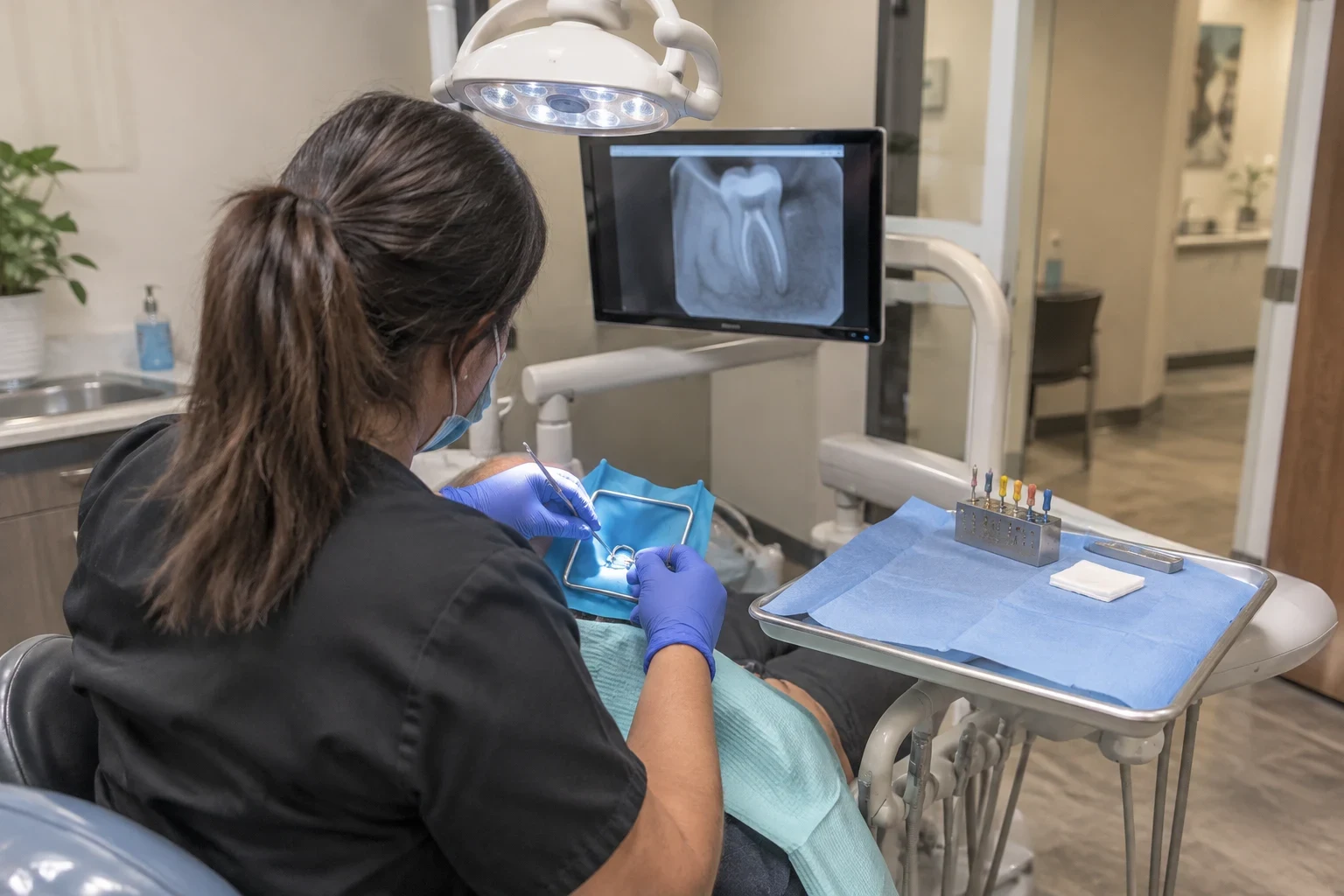
A root canal removes the infected or damaged nerve inside a tooth so you can keep the tooth itself. We numb the area well, work at a steady pace and plan the crown that protects it afterward, so the tooth keeps doing its job.
Keep the Tooth You Already Have
The center of each tooth holds soft tissue with nerves and tiny blood vessels. Dentists call it the pulp. Bacteria can get in through a deep cavity, a crack, or an old filling that has started to leak. An infected pulp does not get better by itself, and over time the infection can move into the bone and cause an abscess.
A root canal clears out that inner tissue, seals the tooth and leaves your natural root right where it is. That root keeps the jawbone around it healthy and holds neighboring teeth in place. So we look at saving a tooth first, before pulling it comes up.
Some teeth are split too far down or have too little left to work with. When that is the case, we say so and talk you through extractions and dental implants as the next step.
What Your Root Canal Includes
Digital X-rays and a careful exam
We look at the roots, the bone that holds them and any hint of an abscess. When the canals are hard to see on a regular image, a CBCT scan may help.
Numbing you can count on
Before we begin, we check that the tooth is completely numb. If you feel something during treatment, let us know and we pause to give you more.
Clearing out the canals
We take out the inflamed or infected tissue, then clean and rinse every canal to flush the bacteria away. A molar may have three or four canals, and we treat each one just as carefully.
Sealing it shut
Each canal gets filled with a rubbery material and sealed to keep bacteria out. We cap the top with a temporary filling while your crown is made.
Planning the crown
Without its nerve, a tooth grows more brittle over the years, and back teeth take the most chewing force. A crown holds the tooth together so it keeps working.
Signs a Tooth May Need a Root Canal
Sensitivity that won't fade
A quick zing from cold water is normal. If the ache hangs on for a minute or more after something hot or cold, the nerve may be on its way out.
Throbbing that keeps you up
A deep, steady ache that gets worse at night or when you lie down often means pressure is building inside the tooth.
Soreness when chewing
Pain when you bite down can mean the infection has worked its way to the tip of the root.
A sore spot that drains
Watch for a little raised spot on the gum beside the tooth, sometimes leaking a bad taste. If it shows up again and again, an abscess is likely underneath.
A darkening tooth
A tooth that turns gray after a fall or a hit may have a damaged nerve, even if it doesn't hurt at all.
Puffy gum or cheek
Swelling means the infection is spreading. Get it looked at soon rather than waiting to see if it goes down.
How the Visit Goes
- 1
Exam and X-rays
We find the tooth that is causing the trouble and confirm it needs a root canal. You get a clear treatment plan and the cost before we begin.
- 2
Numbing and protecting the tooth
We numb the area and place a thin rubber sheet around the tooth. It keeps the tooth dry and clean while we work.
- 3
Cleaning and sealing
We open the tooth, clean out the canals and seal them. Most root canals take one visit, and some infected teeth need two.
- 4
Crown and follow-up
Once the tooth settles, we place a crown. After that, regular cleanings and checkups keep an eye on it so it keeps working for years.
What Changes the Price of a Root Canal
No two teeth are built quite the same, so a root canal has no single set price. We examine the tooth first, then give you the cost in writing before any work starts. Here is what moves that number up or down.
- Front tooth or molar
- A front tooth usually has one canal. A molar can have three or four, and each one takes its own time to clean and seal.
- The crown that follows
- Back teeth almost always need a crown after the canals are sealed. It shows up as a separate line in your treatment plan, so the full cost is clear from the start.
- Redoing an old root canal
- Now and then a tooth treated years ago picks up a new infection. We have to remove the old filling material before cleaning the canals again, and that adds work.
- How you pay
- We are in-network with 15+ major PPO dental insurance plans. Patients without coverage can ask about our in-house Membership Plan for uninsured patients. Another option is 0% interest financing for up to 24 months, and there is no credit score impact to check for preapproval.
Root Canal Questions
Something not covered here? (972) 914-6408
Does a root canal hurt?
The pain comes from the infection, not the treatment. Once the tooth is numb, most patients compare it to getting a big filling. The tooth may be tender for a few days afterward, and over-the-counter pain relievers usually take care of that.
Wouldn't it be easier to pull the tooth?
An extraction is faster on the day, but it leaves an empty space. The jawbone there slowly shrinks and the teeth next to it can lean in, which may mean a bridge or dental implants down the road. When a tooth can be saved, saving it is usually the smarter choice for the long run. When it can't, we will tell you.
How long will the tooth last after treatment?
A treated tooth with a well-fitted crown can last many years, and often a lifetime. Keep brushing and flossing, and come in for regular cleanings so we spot changes early. If you clench or grind at night, we may suggest a night guard to keep the tooth from cracking.
Is a crown really necessary?
On back teeth, nearly always. With the nerve and blood supply gone, the tooth slowly dries out and turns brittle, and chewing force can split it. A front tooth that lost very little structure can sometimes get by with a filling.
Can I drive home and go back to work?
Yes. We only use local numbing, so most patients drive themselves and carry on with their day. Your lip and cheek may feel numb for a few hours, so hold off on eating until that fades.
Have That Sore Tooth Looked At Soon
An aching tooth today is usually easier to save than an abscessed one a few weeks from now. New patients can start with our $25 Focused Evaluation. It includes a full exam and digital X-rays, a CBCT scan when we need one, and time with us to talk through your treatment plan.